



Ageing in place means staying safe, independent, and comfortable in your own home as you get older.
Whether it is possible for you will largely depend on the practical features of your home. In the bathroom, wet floors, high bath sides, and awkward step-overs make them one of the most common places for slips and falls, and for anyone with reduced mobility, that risk can chip away at confidence and independence over time.
Two popular solutions for tackling this problem are wet rooms and walk-in baths. Both are designed to make bathing safer and easier, but they work in very different ways and suit different needs.
If you’re comparing wet rooms vs walk in baths for yourself or a family member, the right choice comes down to mobility level, available space, and personal bathing preference.
Read on to learn more about both options so you can make an informed decision.
What is a Wet Room?
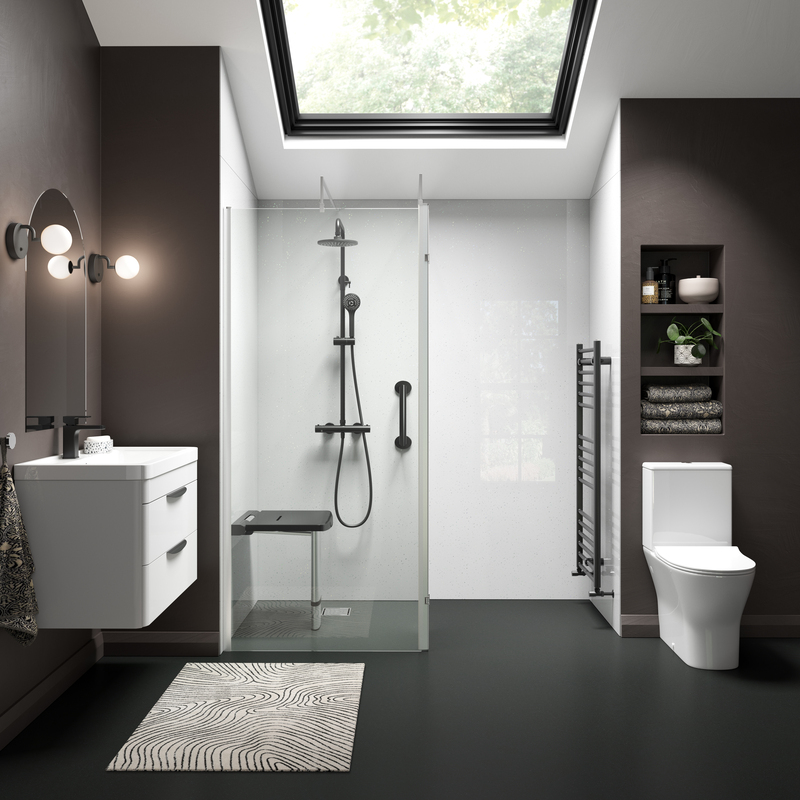
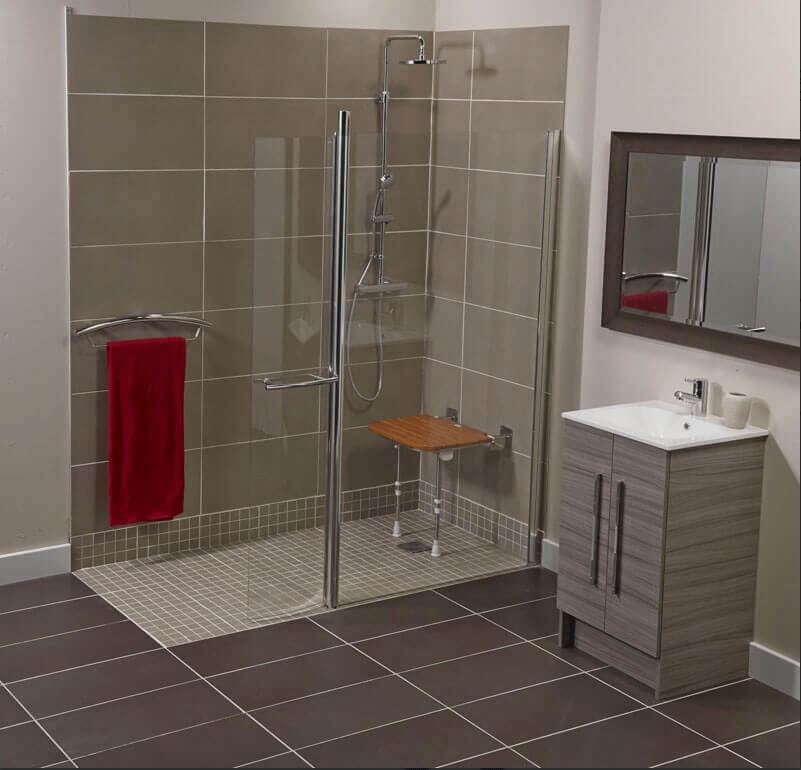
A wet room is a completely waterproofed bathroom where the entire floor is sealed against water, and the shower area sits level with the rest of the room – there is no raised tray or cubicle.
There’s no step, lip, or barrier to climb over before washing, just a smooth, gently sloped floor that channels water away to a drain.
Key Features of Wet Rooms
- Level access – no step entry, so you can walk or wheel straight into the showering area
- Open-plan layout – the shower isn’t boxed in, providing a more spacious, contemporary environment
- Drainage system built into the floor – water flows away via a gentle gradient rather than pooling
- Optional seating and grab rails – these can be positioned exactly where you need them, usually close to the toilet, sink, and shower
Benefits of Wet Rooms for Ageing in Place
Wet rooms are often held up as one of the best long-term investments for accessible bathrooms. Here’s why:
- Wheelchair accessibility – the open, step-free design allows wheelchair users to move in and out with ease
- Reduced trip hazards – there is no step or tray edge to catch a foot or a walking frame on
- Easy maintenance for cleaning – there are fewer fixtures and corners, which means there are fewer places for limescale to build up
- Future-proof design – they are suitable for changing mobility needs, so you’re less likely to need another renovation later down the line
Potential Drawbacks of Wet Rooms
Wet rooms are a great choice for many older adults, but they’re not without their downsides. Because the shower area isn’t enclosed, water can spread farther than in a traditional cubicle if the room isn’t carefully designed.
Some people also find that open, tiled wet rooms feel colder or less private than an enclosed shower. And because the whole room needs proper waterproofing (known as tanking), installation is more involved and therefore usually more costly than fitting a standard shower.
What is a Walk-in Bath?
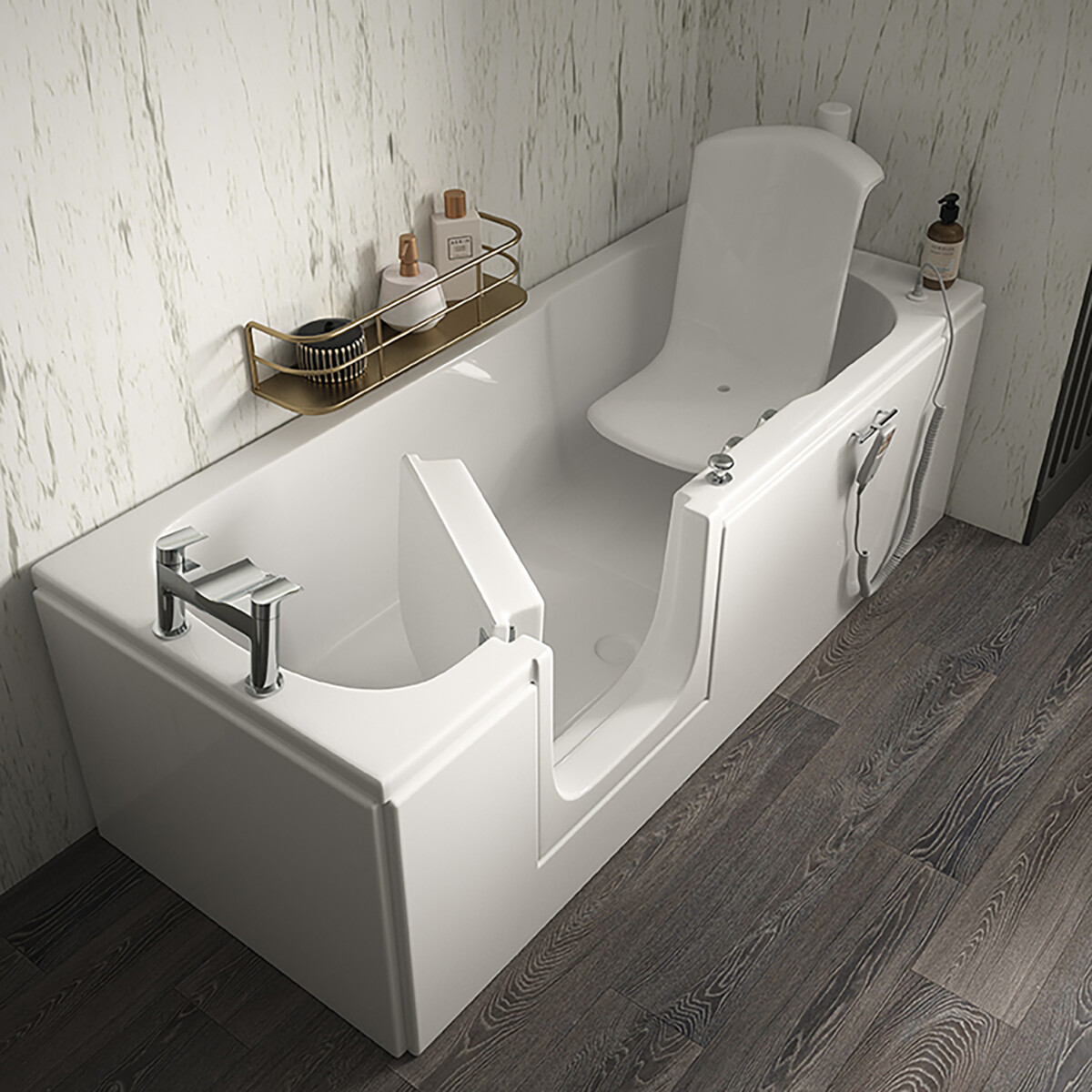
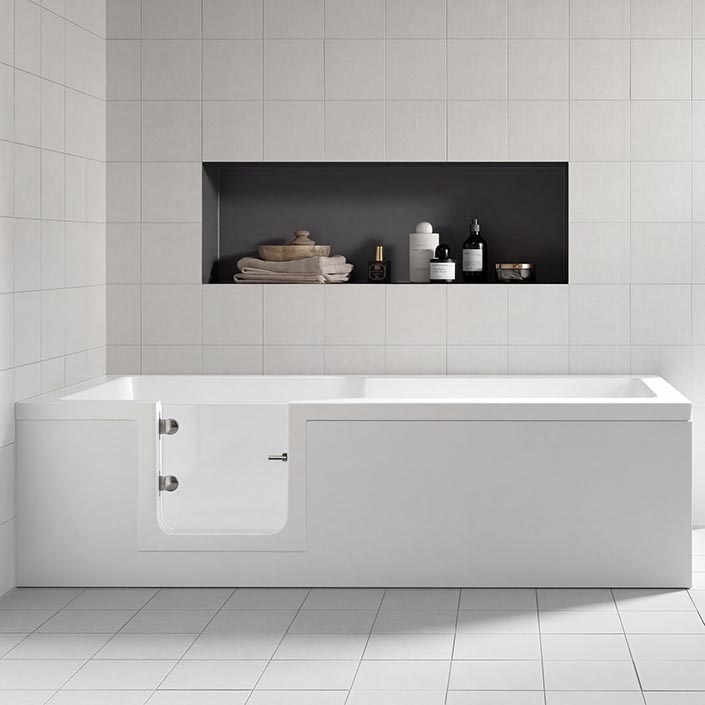
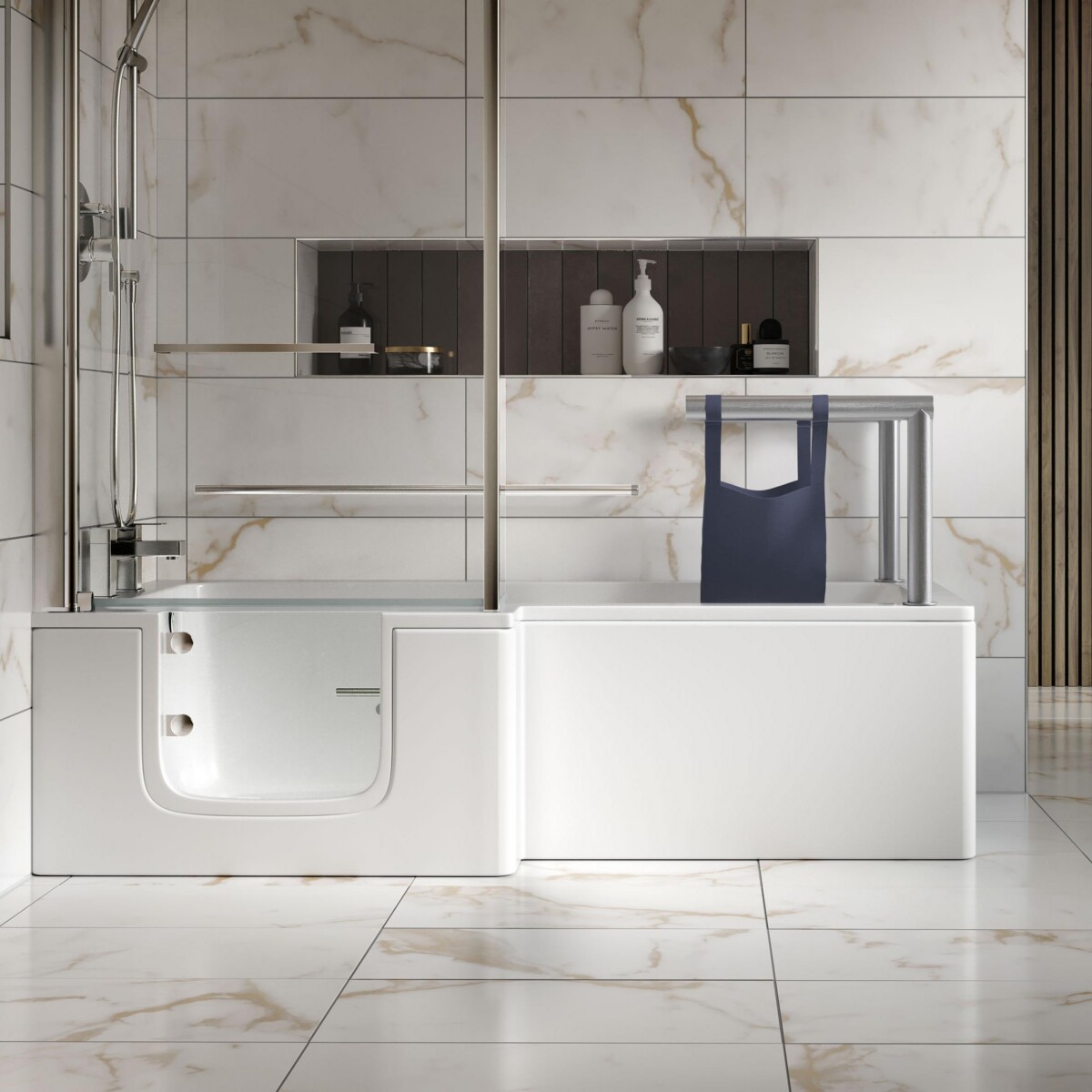
A walk in bath is a bathtub with a watertight door built into the side, allowing the user to step over a very low threshold, rather than climbing over a traditional high bath wall.
Once seated inside, the user seals the door, and the bath fills around them, and they then bathe while seated rather than lying down.
Key Features of Walk-in Baths
- Watertight door – seals securely once closed, allowing the bath to fill safely.
- Built-in seat – bathing is done from a seated position, reducing strain on hips and knees
- Low threshold entry – it’s far easier to step inside than a conventional bath
- Optional hydrotherapy features – many models include air or water jets for therapeutic bathing
Benefits of Walk-in Baths for Ageing in Place
- Safer bathing compared to traditional tubs – there is no need to lift a leg high over a bath wall
- Comfortable seated bathing – reduces the physical effort of getting up and down
- Therapeutic benefits – hydrotherapy jets can be soothing for arthritis and poor circulation
- Retains the traditional bathing experience – ideal for anyone who prefers a soak over a shower
Potential Drawbacks of Walk-in Baths
The trade-off with walk-in baths is time. You need to sit and wait while the bath fills with water and drains around you, which can mean sitting in a cooling bath for a few minutes once you have finished washing.
They’re also less suitable for full-time wheelchair users, since a transfer into a seated bathing position is still required, and their footprint can feel bulky in a smaller bathroom.
Wet Rooms vs Walk-in Baths: Key Differences
Accessibility
Wet rooms offer better accessibility than walk-in baths, especially for wheelchair users and people who rely on a carer for washing. The open layout of a wet room allows both the user and a carer to move around safely and easily.
Walk-in baths suit people who can transfer independently into a seated position but may struggle with a conventional high-sided bath or shower step.
Safety
Both wet rooms and walk-in baths improve the safety of a standard bath or shower, but wet rooms further reduce the risk of falls because there’s no step, lip, or bath wall to navigate.
Comfort and User Preference
This really comes down to what you enjoy most. Walk-in baths offer a relaxing soak and the comfort of warm water all over the body, while wet rooms prioritise practicality, speed, and independence for those who prefer to shower.
Space Requirements
Wet rooms work well even in small or awkwardly shaped bathrooms, as there’s no bathtub or shower tray to accommodate. Walk-in baths require a reasonable footprint, similar to or slightly larger than that of a standard bathtub.
Installation and Cost
Wet rooms usually require full waterproofing (tanking) and sometimes floor alterations to create the correct drainage gradient. This can add to installation complexity and overall cost. Walk-in baths are often a more straightforward retrofit into an existing bath space, though they remain a premium product in their own right.
Which Option is Best for Ageing in Place?
Choose a Wet Room If:
- You or other bathroom users rely on a wheelchair, walking frame, or other mobility aids
- Carer assistance is needed for washing
- Long-term accessibility is the priority, not just your current needs
- You want a low-maintenance bathroom that is easy to keep clean
Choose a Walk-in Bath If:
- You prefer bathing over showering
- Your mobility is limited, but you don’t use a wheelchair
- Therapeutic bathing (for arthritis, poor circulation, or general relaxation) matters to you
- Your bathroom has the space to accommodate a bath-sized unit
Considerations Before Making a Decision
Mobility Level and Future Needs
Many health issues affecting your mobility are progressive, so you need to plan for the future. A solution that works now might not be ideal in five years’ time. This is why many people opt for the wet room’s step-free design to future-proof the home.
Bathroom Layout and Space
It’s important to consider structural limitations. Drainage position, floor joists, and existing plumbing all affect what’s realistically achievable. A professional survey will identify any constraints early.
Budget and Installation Costs
Costs for both options vary considerably depending on the room size, the finish you choose, and the amount of preparation required.
Instead of relying on rough estimates, it’s best to arrange a professional assessment to get an accurate, tailored quote.
Professional Advice and Assessment
At Bathing Mobility Advisory Service, we help people weigh up wet rooms and walk-in baths based on their personal circumstances, not a one-size-fits-all recommendation.
According to NHS guidance on falls prevention, home hazard assessments and practical adaptations are among the most effective ways to reduce the risk of falls for older adults. A tailored bathroom consultation is a sensible starting point if you are considering your options.
FAQs
Are wet rooms better than walk-in baths for elderly people?
It depends on the individual. Wet rooms suit people with more significant mobility needs, including wheelchair users, while walk-in baths suit those who prefer bathing and can transfer independently. If you’re searching for bathrooms for the elderly, neither is necessarily better than the other.
Can a small bathroom be converted into a wet room?
Yes, in most cases, with the right tanking and a design tailored to the available space. A professional survey will confirm what’s achievable in your bathroom.
Do walk-in baths use a lot of water?
Walk-in baths use slightly more water than standard baths because the door needs to be sealed before filling, but usage varies by model and size.
Which option adds more value to a home?
Wet rooms are often seen as a more modern, desirable feature by prospective buyers. However, it ultimately depends on the buyer’s own needs and the local property market.
There’s no single right answer when it comes to wet rooms vs walk-in baths.
Both options offer safety and independence benefits over a traditional bathroom, but they serve different needs.
The best choice for you depends on your mobility level, personal preference for showering or bathing, and the space that’s available in your home.
Speaking with a specialist who can assess your bathroom and needs is the best way to find a solution that will serve you well now and in the years ahead.