




Quality of life means different things for different people. For older adults, a few themes recur: staying safe and comfortable at home, maintaining independence, feeling confident in their daily routines, and staying connected with the people and activities that matter most to them.
Improving quality of life doesn’t always require dramatic changes. Often, it’s the practical, everyday things that make the biggest difference.
The home environment plays a central role. Small adaptations, especially in higher-risk areas like the bathroom, can have a meaningful impact on safety, confidence, and the ability to live well on your own terms.
This guide explores how to improve quality of life for older adults and outlines the practical steps to consider, from minor adjustments to more complex home adaptations.
Get a FREE Brochure
Simply complete our form to see a full range of bathing solutions & their key features. It takes no time at all!
What Does “Quality of Life” Mean for Older Adults?
For older adults, quality of life tends to rest on four interconnected pillars:
- Physical comfort and safety – Being able to move through the home safely, manage personal care without discomfort, and live without the constant anxiety of potential falls or accidents.
- Emotional wellbeing and confidence – Feeling capable and in control of daily life. Confidence in one’s own abilities has a direct effect on mood, motivation, and overall outlook.
- Independence – The ability to manage everyday tasks without relying on others. For many older adults, maintaining independence is closely tied to self-worth and dignity.
- Social connection – Staying engaged with friends, family, and the wider community. Isolation is one of the most significant risk factors for poor mental and physical health in later life.
Each of these pillars supports the others. A person who feels safe and confident at home is much more likely to maintain their independence, and a person who is independent is more likely to stay socially connected. The home environment underpins all of it.
Supporting Independent Living for the Elderly
When asked, most adults say they would prefer to stay in their own home for as long as possible.
According to Age UK, the majority of people over 65 would prefer to age in place rather than move into residential care. With the right support and home adaptations, this is an entirely achievable goal for many people.
Familiar surroundings represent years of accumulated knowledge: where everything is, how the space works, which routes feel natural. Disrupting that by moving home, even to somewhere objectively more suitable, can be disorienting and distressing.
A more useful approach is to adapt the existing home to meet changing needs, reducing the barriers that make independent living harder, without requiring a disruptive move.
The home environment directly shapes independence – a bathroom that’s difficult to use safely, a hallway that’s poorly lit, or a front step with no handrail all create friction that gradually erodes confidence and capability.

The Role of the Home in Ageing Well
Falls are the most common cause of injury-related hospital admissions in people over 75 in the UK. Many of these falls happen at home, in environments that could have been made safer with relatively modest changes.
Beyond falls, mobility barriers in the home, such as steps, narrow doorways, and hard-to-reach fixtures, gradually add up to significant daily challenges. Each small difficulty chips away at confidence and independence, sometimes leading people to avoid certain activities altogether, rather than risk struggling with them.
Proactive adaptation is almost always better than reactive adaptation. Making changes before a fall or a significant decline in mobility means they can be chosen carefully, installed well, and gradually integrated into daily life, rather than rushed through in response to a crisis. Key areas of the home to consider include the bathroom, stairs, lighting, and flooring surfaces.
Bathroom Adaptations That Improve Quality of Life
Why the Bathroom Is One of the Highest-Risk Areas
The bathroom combines several factors that make it inherently higher-risk than other rooms: wet surfaces, hard floors, confined spaces, and movements, such as stepping, lowering, and reaching, that place significant demands on balance and strength. It is consistently identified as one of the most common fall locations in the home.
Beyond the physical risk, a difficult bathroom experience can have a lasting effect on confidence. Someone who has slipped, or fears slipping, may start to dread what should be a routine part of daily life. This anxiety can lead to reduced personal care, which in turn affects physical health, self-esteem, and social confidence.
Key Bathroom Adaptations to Consider
The right bathroom adaptations depend on individual needs, but the most impactful options include:
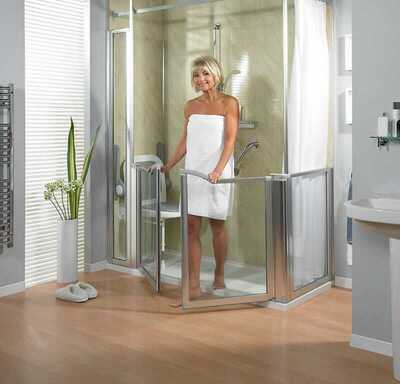
- Walk in baths and level-access showers – Removing the need to step over a high bath side or shower tray is one of the most significant safety improvements available. Walk-in showers with minimal thresholds and open access make bathing far easier and safer. Walk-in baths allow users to step in at floor level before filling, eliminating the most hazardous part of traditional bathing.
- Grab rails and support fixtures – Strategically placed grab rails near the toilet, shower, and bath provide security at the moments of highest risk. Modern rails are available in a range of finishes and can be easily integrated into the bathroom design.
- Non-slip flooring – Replacing standard tiles or smooth flooring with slip-resistant alternatives reduces the risk of falls in the bathroom.
- Shower seating – A fold-down or fixed shower seat allows you to bathe comfortably without the fatigue or instability that can come from standing for extended periods.
- Raised-height toilets – Comfort height toilets or raised seats reduce the effort required to sit and stand, making a noticeable difference for anyone with reduced lower body strength or joint problems.
- Thermostatic controls – Anti-scald thermostatic valves maintain a consistent water temperature, protecting against sudden changes in pressure and preventing burns. This is particularly important for people with reduced sensation.
How Accessible Bathrooms Support Independence
A well-adapted bathroom reduces the need for assistance with personal care – one of the most private and dignity-sensitive aspects of daily life. Being able to bathe independently, without relying on a carer or family member, matters enormously to many older adults.
It also encourages maintaining a regular routine. When bathing feels safe and manageable, people are more likely to engage in it consistently, leading to positive effects on their physical health, self-care, and the confidence that comes from feeling clean, comfortable, and well presented.
Small Changes vs Full Renovations
Not every bathroom adaptation requires a full renovation. Simple additions such as a grab rail beside the toilet, a non-slip mat, or a fold-down shower seat can make an immediate difference at relatively modest cost and disruption.
On the other hand, there are some situations where a more comprehensive redesign delivers better long-term value, for example:
- Where multiple adaptations are needed
- When the existing layout creates inherent barriers
- When mobility is likely to change significantly over time
A full accessible bathroom renovation, designed around the specific needs of the person using it, produces a more cohesive and future-proof result than a series of piecemeal adaptations.
If you’re considering more comprehensive changes, Bathing Solutions specialises in accessible bathroom adaptations, from individual additions to total redesigns. A no-obligation consultation can help identify the most appropriate adaptations for your situation.
Improving Physical Health and Mobility
Staying physically active in later life has a profound effect on overall health, independence, and quality of life.
NHS guidance recommends that adults over 65 aim for at least 150 minutes of moderate activity per week, alongside strength and balance exercises that directly reduce the risk of falls.
For many older adults, the barrier to staying active is the practical experience of moving through the home. A bathroom that’s difficult and tiring to use after exercise, or a home layout that makes movement unnecessarily tricky, can subtly discourage physical activity over time.
Improving the home environment, including making the bathroom easier and more comfortable to use, removes those practical barriers and makes staying active more sustainable. Safe, easy access to a shower after a walk or a gentle exercise session is a small thing that can make a meaningful difference to daily habits.
Supporting Mental Health and Emotional Wellbeing
The relationship between independence and emotional wellbeing is well-established. People who feel in control of their daily lives report better mood, higher levels of life satisfaction, and lower rates of depression and anxiety, whatever their age.
For older adults, loss of independence, even in small ways, can have a significant emotional impact. Struggling with personal care, relying on others for tasks that used to feel routine, or feeling anxious about the risk of a fall in the bathroom all take a toll over time.
Accessible home adaptations can help to restore that sense of control. When a bathroom is safe and easy to use, anxiety around bathing reduces. When personal care feels manageable, confidence improves. And when confidence improves, people are more likely to engage with the rest of life, including other people.

Encouraging Social Connection
Social isolation is a serious health risk for older adults. Age UK reports that more than two million people in England over 75 live alone, and that chronic loneliness is associated with serious health consequences comparable to smoking 15 cigarettes a day.
Staying socially connected requires a sense of control, and for many older adults, this peace of mind starts with feeling comfortable and well-presented. An accessible bathroom that makes personal care easy and dignified plays an important role in supporting the confidence to leave the house, meet friends, attend community activities, or simply feel ready to face the day.
Technology also plays an increasingly important role. Video calls, messaging apps, and online communities all offer meaningful ways to stay connected when leaving the house is more difficult. But nothing quite replaces in-person connection, and the practical reassurance that comes from a home that works well makes that easier to sustain.
Nutrition and Daily Comfort
Physical comfort in the home extends beyond mobility. Adequate warmth, good lighting, and a comfortable living environment all contribute to daily wellbeing, and are worth reviewing as needs change.
Nutrition is equally important. A balanced diet and good hydration support energy levels, immune function, and cognitive health. For older adults living alone, meal preparation can become more challenging as mobility or energy levels change. It’s worth considering whether the kitchen layout, storage, and appliances remain manageable and safe.
Simple adjustments, such as better lighting over worktops, reorganising storage to reduce bending and reaching, or switching to easier-to-operate appliances, can make meal preparation more manageable and more enjoyable.
Planning Ahead: Future-Proofing the Home
The most effective home adaptations are those made proactively, before a fall or a significant change in mobility forces a rushed response. Planning ahead allows changes to be made carefully, properly budgeted for, and gradually integrated into daily life, rather than implemented under pressure.
This is especially true for bathroom adaptations. Installing a level-access shower, reinforcing walls for grab rails, or widening a doorway during a broader renovation costs much less than carrying out the same work as a standalone project later. And the benefits begin immediately.
Future-proofing the home isn’t a pessimistic exercise. It’s a practical and empowering one – a way of taking control of the future, rather than waiting to react to it.
Small Changes, Big Impact
Improving quality of life for older adults doesn’t always require large investments or major disruption. Often, the most meaningful improvements come from targeted, well-chosen changes that address the specific barriers affecting daily life.
The bathroom is one of the highest-impact areas to start. It’s used every day, the risks are real, and the confidence that comes from a safe, accessible bathroom extends to almost every other aspect of daily life.
Whether the right starting point is a single grab rail or a complete accessible bathroom redesign, Bathing Solutions is here to help you find the most appropriate solution. Get in touch to arrange a no-obligation consultation and take the first step toward a home that works better for the life you want to live.